



Canada Visa Photo — 35×45 mm for IRCC and Print
Prepare the 35×45 mm photo for Canada IRCC visa (TRV), Study Permit, Work Permit and Express Entry applications with AI in 30 seconds — official IRCC size, JPEG min 420×540 pixels, back-of-print studio + date on paper submissions.
- Free analysis
- ICAO 9303
- AI-Powered
- GDPR compliant
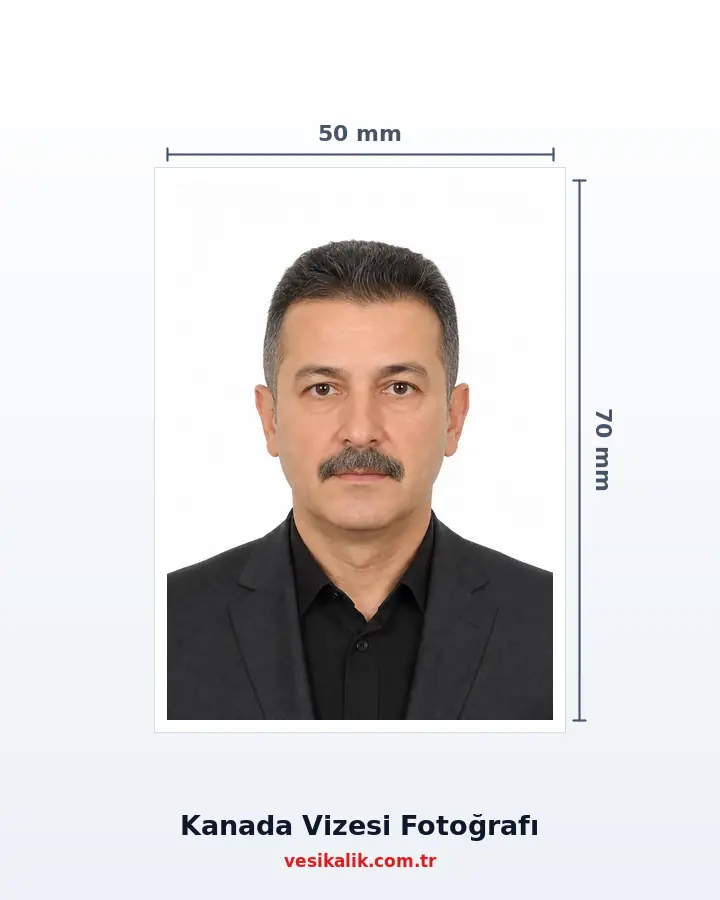
Key takeaways
- Canadian VISA size is 35×45 mm — 50×70 mm is only for passport and PR Card
- Head height (chin to crown) 31-36 mm; the same band as Schengen
- Digital: JPEG minimum 420×540 pixels, maximum 4 MB (IRCC portal)
- Paper: 2 identical prints; back must show name + date of birth + studio address + date taken
Prepare the 35×45 mm photo you upload to IRCC or attach to a paper file for Canada TRV (visitor) visa, Study Permit, Work Permit, Express Entry (FSW/CEC/FST), family sponsorship and LMIA work-permit applications.
How it works
Canada Visa Photo — 35×45 mm for IRCC and Print — get it right in 4 steps.
-
Shoot facing the camera in front of a white or very light background
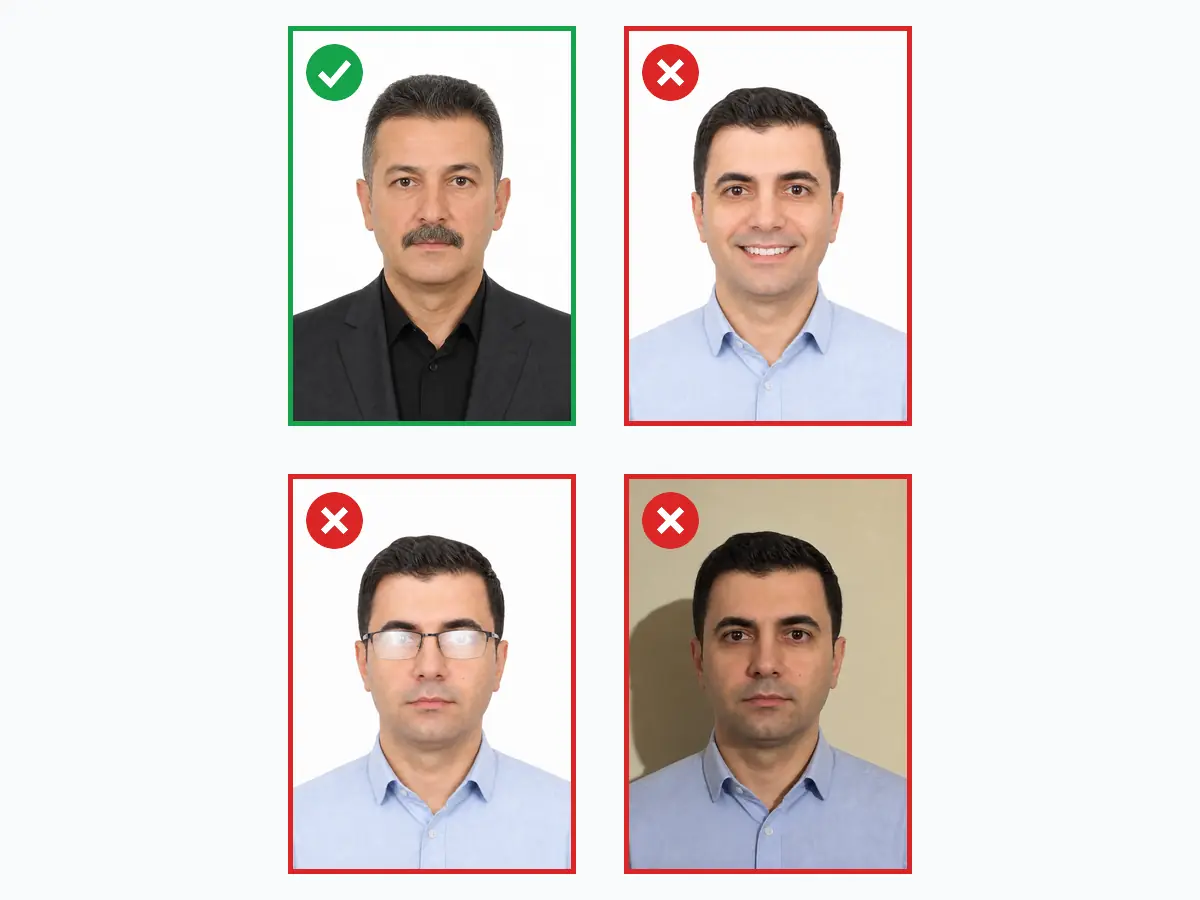
Hold the phone at eye level and take one daylight frame; colour or black-and-white are both accepted, but colour is preferred. Non-tinted prescription glasses are allowed in Canada — pupils must stay visible and the frame must not cover any part of the eyes.
-
Upload the photo and start the IRCC check
The AI measures the 31-36 mm head height, neutral expression (no smiling, mouth closed), background uniformity and the eye/frame position against Canada.ca TRV criteria.
-
Let the 35×45 mm crop apply automatically
The head is framed to the 31-36 mm band and the background moved to white/light grey; the JPEG comes out at 420×540 pixels or above and under 4 MB, ready for the IRCC portal.
-
Upload to the portal or ship prints with back-of-photo info
Upload the digital file to IRCC. Paper applications need 2 identical prints; the back must carry name, date of birth, studio name+address and date taken — stamped or handwritten. Stick-on labels are NOT accepted.
How much does an ID photo cost? (2026)
Photo analysis and the biometric compliance check are completely free. Digital file and print prices are below — identical to the live prices in the order wizard.
| Service | Price |
|---|---|
| Photo analysis & biometric check | Free |
| Digital File | 50.00 TRY |
| Canada Visa print package | 250.00 TRY |
| Cargo | 100.00 TRY |
Technical specifications
- Authority
- Immigration, Refugees and Citizenship Canada (IRCC)
- Size (VISA)
- 35×45 mm (TRV, Study/Work Permit, Express Entry)
- Size (PASSPORT/PR)
- 50×70 mm (not this landing — for passport/PR Card)
- Head height
- 31–36 mm (chin to crown)
- Digital file
- JPEG, min 420×540 px, max 4 MB
- Quality photographic paper, 2 identical copies
- Back of print
- Name + date of birth + studio name/address + date taken (stamp/handwriting)
- Background
- Plain white or light-coloured, shadow-free
- Glasses
- Non-tinted prescription ALLOWED; sunglasses NOT accepted
- Colour
- Colour or black-and-white accepted; colour preferred
- Freshness
- Taken within the last 6 months
Requirements checklist
- Size 35×45 mm (Canadian VISA) — 50×70 mm is for passport/PR Card, not accepted on a TRV.
- Head height 31-36 mm; face centred and looking straight at the camera.
- Digital file JPEG, at least 420×540 pixels, at most 4 MB.
- White or light-coloured, uniform background; no shadows, patterns or gradients.
- Neutral expression, mouth closed, eyes open — NO smiling (explicit IRCC rule).
- Non-tinted prescription glasses are tolerated; the frame must not cover the eyes and there must be no glare.
- Paper: 2 identical prints; back must show name + date of birth + studio + date (stamp or handwriting).
- The photo must be from the last 6 months and reflect your current appearance.
Related document sizes
Official photo sizes for documents related to this page, with pixel equivalents.
| Document | Physical size | Pixels (300 DPI) | Background | Note |
|---|---|---|---|---|
| Canada Visa | 5 × 7 cm | 591 × 827 px | White | IRCC, back-of-print note |
| US Passport & Visa | 5.1 × 5.1 cm (2×2 in) | 600 × 600 px | White | Square format required |
| United Kingdom Passport | 3.5 × 4.5 cm | 413 × 531 px | Cream / Light grey | ICAO compliant |
| EU Passport & Schengen Visa | 3.5 × 4.5 cm | 413 × 531 px | White or light grey | ICAO compliant |
| Bar Association ID | 3.5 × 4.5 cm | 413 × 531 px | White | ICAO biometric |
| Australia Visa | 3.5 × 4.5 cm | 413 × 531 px | White | ICAO compliant |
What Size Is a Canada Visa Photo? 35×45 or 50×70? (2026)
This is the single most common source of confusion online: many guides say "50×70 mm" for a Canadian photo. That is correct for the Canadian PASSPORT and the Permanent Resident Card, but WRONG for a Canadian VISA application. The official "Temporary Resident Visa application photograph specifications" document on Canada.ca states word-for-word: "The frame size must be at least 35 mm x 45 mm (1 3/8″ x 1 3/4″)." This size applies to TRV visas, Study Permits, Work Permits and Express Entry (FSW/CEC/FST) applications alike. Primary source: Canada.ca TRV Photograph Specifications.
Head height (chin to crown) is 31-36 mm — the same band as a Schengen visa photo. Canada's real distinguishing rules are elsewhere: the glasses policy (below) and the paper back-of-print rule. Printing at the wrong size and applying causes the file to be returned with "provide new photographs" — often weeks of delay, especially damaging during an Express Entry ITA window.
Are Glasses Allowed on a Canada Visa Photo?
Short answer: YES, conditionally. This is an important rule that separates Canada from the US and UK visas. The Canada.ca TRV document states exactly: "You may wear non-tinted prescription glasses as long as your eyes are clearly visible. Make sure that the frame does not cover any part of your eyes. Sunglasses are not acceptable." Non-tinted prescription glasses are accepted on three conditions: pupils clearly visible, frame not covering any part of the pupil, no lens glare.
Sunglasses, tinted lenses and coloured contact lenses are rejected in every case. In Canada mode, our analysis does not raise an automatic rejection for glasses; it only checks glare and whether the frame crosses the eye. A religious headscarf is also accepted — forehead, jawline and face contour must remain fully visible. For an international comparison of glasses policies see the 35×45 mm size guide.
What Does IRCC Require? Visa, Passport and PR Compared
| Document | Size | Head height | Digital file | Print count | Back of print |
|---|---|---|---|---|---|
| TRV visa (visitor) | 35×45 mm | 31-36 mm | JPEG 420×540 – 4 MB | 2 identical | Name+DOB+studio+date |
| Study Permit | 35×45 mm | 31-36 mm | JPEG 420×540 – 4 MB | 2 identical (paper) | Name+DOB+studio+date |
| Work Permit / LMIA | 35×45 mm | 31-36 mm | JPEG 420×540 – 4 MB | 2 identical (paper) | Name+DOB+studio+date |
| Express Entry (FSW/CEC/FST) | 35×45 mm | 31-36 mm | JPEG 420×540 – 4 MB | Digital upload | Digital confirmation document |
| Permanent Resident Card | 50×70 mm | 31-36 mm | JPEG 715×1000 – 2000×2800 px, max 4 MB | 2 identical | Name+DOB+studio+date |
| Canadian Passport (citizen) | 50×70 mm | 31-36 mm | Print-first | 2 identical | Name+DOB+studio+date |
The head-height band is the same (31-36 mm) across all IRCC documents; the FRAME size differs. As the table shows, a Canadian VISA requires 35×45 mm; 50×70 mm is only for citizenship, PR Card and the Canadian passport. vesikalik.com.tr automatically applies the correct size for the document you pick; the same source photo can serve both a TRV (35×45) and a later PR application (50×70).
The "back-of-print" rule is identical across 5 of the 6 document types: the back of one photo must show the applicant's NAME + DATE OF BIRTH + photography studio NAME and FULL ADDRESS + DATE the photo was taken. Only the Express Entry digital application replaces the printed back with a "confirmation document" upload (a studio receipt or equivalent). Detailed guidance: Canada.ca Permanent Resident photos.
What Goes on the Back of the Print? The IRCC-Specific Rule
This is the most distinctive rule that sets Canada apart from other big visa authorities: four pieces of information must appear on the back of the physical print — (1) the applicant's name, (2) date of birth, (3) name and FULL address of the photography studio, and (4) date the photo was taken. The photographer may use a stamp or handwrite these details; **stick-on labels are NOT accepted**. A guarantor signature is NOT required — this is often confused with citizenship applications.
vesikalik.com.tr's print package prints all this on the back automatically, using an official stamp/label that carries the name and date of birth you enter in the order, the shoot date and our studio information. For digital submissions (IRCC portal) you upload a document that contains the same information (a photo receipt, shoot confirmation) into the "back of photo" field; our system handles that automatically. Source: Canada.ca — back-of-photo requirements.
Express Entry and Family Applications: How to Shoot Efficiently?
After the Express Entry Invitation to Apply (ITA), a separate 35×45 mm photo is needed for each spouse, child and dependant. The photo must have been taken within the last 6 months and reflect the "current appearance" — shooting right before the file is submitted (usually within 2 months of ITA) is safest. For family applications, several people can be photographed in one session; vesikalik.com.tr processes 4-5 people in the same session and produces separate JPEGs per person.
For infants and children, IRCC allows extra tolerances (expression and eye-openness for under 6); the country-by-country baby rule table in our baby passport photo guide covers Canada as well. From the same source photo we can also produce US B1/B2 (51×51 mm) or UK ETA/visa (35×45 mm, cream background) versions — Canada TRVs are often filed alongside US B1/B2 because transit routes via the US are common.
Do's and Don'ts
Do
- Use 35×45 mm for a Canadian VISA — 50×70 mm is only for passport/PR Card
- Keep the head height inside the 31-36 mm band
- Choose a white or light-coloured, shadow-free, uniform background
- The digital JPEG must be at least 420×540 pixels and under 4 MB
- For paper applications send 2 identical prints and write the back-of-photo info
Don't
- Do not reuse a Schengen 35×45 photo directly for Canada — the background and file limits differ
- Do not print 50×70 mm for a Canadian VISA — that is the passport/PR size and is NOT accepted on a TRV
- Do not use a stick-on label on the back of the print (stamp or handwriting is required)
- No coloured contact lenses, sunglasses or tinted glasses; non-tinted prescription glasses are tolerated
- Do not edit the photo (background removal, skin smoothing, etc.) — IRCC says "not altered in any way"
FAQ
Should I remove glasses for the photo?
For which countries can I generate valid photos?
What should I pay attention to when taking the photo?
What are the visa photo sizes and requirements?
What are the Canada visa photo requirements?
Do I need a paper photo or a digital file for visa applications?
Is your photo ready?
Upload your photo, run the compliance check and download your print-ready photo in seconds.
Analyze Your Photo Now